Trends in Large Language Models and Their Applications in Quantitative Investing

Trends in Large Language Models and Their Applications in Quantitative Investing

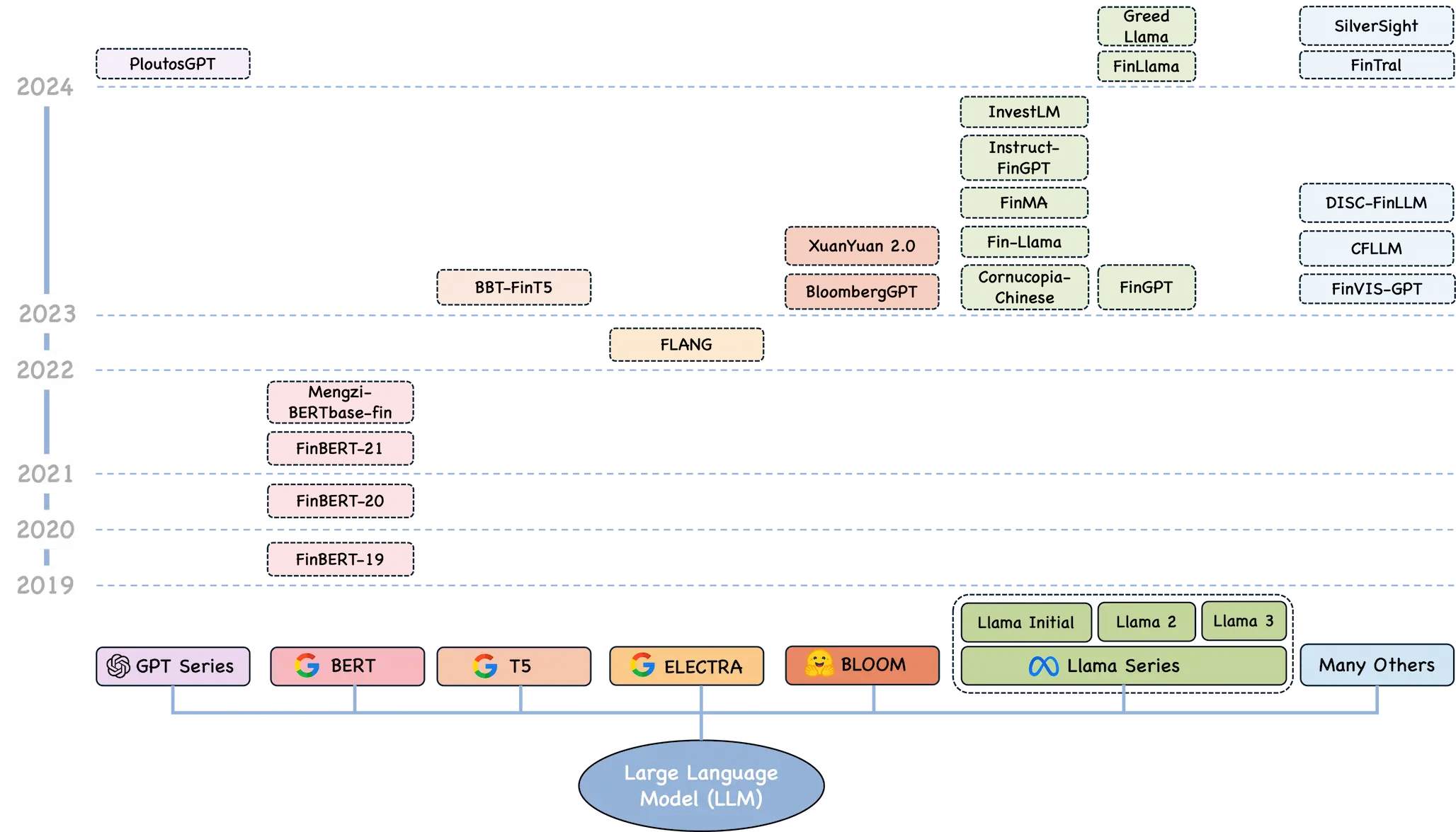
Large language models have become the hottest and fastest-moving frontier in computing since ChatGPT burst onto the scene at the end of 2022. LLMs have gradually shed the role of mere tools and become independent carriers of intelligence that can handle tasks on their own. In 2024, hundred-billion-parameter models such as Qwen2 and Llama3.1 were released one after another, and the performance of open-source models has moved steadily closer to that of closed-source systems. For quantitative researchers, a necessary question is how to combine LLM technology with financial applications to improve research and investment. This article first draws on Li Mu’s talk to discuss LLM trends and best practices, and then reviews specific application scenarios for LLMs in quantitative investing.

Read more
Phase Three Quant Work Summary and Next Steps: Complexity and Cost Control

Thinking One Move Ahead: Multi-Period Portfolio Optimization

In the earlier article Portfolio Optimization for Long-Only Multi-Factor Equity Strategies, I gave a fairly complete introduction to how the problem of solving single-period portfolio weights can be transformed into a quadratic program. This article summarizes the key ideas of the Stanford and BlackRock collaboration paper Multi-Period Trading via Convex Optimization. Published in 2017, that paper offered one of the first systematic treatments of multi-period optimization in portfolio management.

Read more
Algorithmic Trading Strategies Based on Deep Reinforcement Learning

Algorithmic Trading Strategies Based on Deep Reinforcement Learning

There is broad market demand for algorithmic trading. This article analyzes how to implement algorithmic trading from the perspective of deep reinforcement learning, including policy inputs and outputs, reward functions, and neural-network structure. Compared with traditional methods, DRL has clear advantages in optimal execution across multiple orders and does not require precise mathematical modeling of time-varying market microstructure. The policy is optimized toward a global objective. Finally, the article also considers how intraday trading strategies can be integrated organically with alpha strategies.

Read more
Phase Two Quant Work Summary and the Plan Ahead
Neural Networks and Cross-Sectional Asset Pricing: The Art of Priors
Winning by Orthodoxy and Surprise: A Forward Look at Alternative Factor Mining

Winning by Orthodoxy and Surprise: A Forward Look at Alternative Factor Mining

As China’s quantitative investment industry and market environment have matured, traditional pricing factors derived from price and volume data have been mined extensively. Hundreds or even thousands of public research reports have already been published, and some hedge funds even claim to hold tens of thousands of factors. Yet these star-like factors are only different quantitative manifestations of a few underlying forces, such as the illiquidity premium and the idiosyncratic volatility anomaly. They cannot diversify risk when the market enters unusual regimes. In extreme episodes, such as February 2024, most price-volume factors fail or reverse together, causing even larger swings for investors. The performance of domestic quant funds this year has illustrated exactly that. From this angle, these alpha factors are really just special forms of beta.

To obtain genuinely independent excess returns, quantitative researchers have to do the core job of value discovery and develop new factors. There are three main routes:

  • introduce new data
  • apply new processing methods
  • improve existing factors

Among these three sources of new factors, this article focuses on building alternative factors from new data plus new methods in order to capture mispricing caused by investors’ limited attention. Concretely, I split the discussion into similarity momentum and text analysis.

Read more

Evaluation Metrics for Quantitative Models and Portfolios

Quantitative trading relies on backtesting to iterate on investment strategies and improve out-of-sample portfolio performance. This article uses formulas together with code to introduce a selected set of return-risk metrics for portfolios, and also discusses how to evaluate return-prediction models and risk-prediction models.

Read more
Portfolio Optimization for Long-Only Multi-Factor Equity Strategies

Portfolio Optimization for Long-Only Multi-Factor Equity Strategies

Quantitative investment strategies often rely on mathematical programming to determine portfolio weights. One reason is to balance objectives such as return and risk more scientifically; another is to use optimization as the layer where subjective and objective constraints can be introduced in a unified way. This article focuses on short-horizon, long-only equity alpha strategies built on multi-factor theory, and reviews practical portfolio optimization methods. It also summarizes mainstream approaches for forecasting the key inputs required by optimization: expected return, risk, and transaction cost.

Read more