Convertible Bond Quant Strategy: Alpha Selection, CCB Pricing, and Futures Hedging

As traditional dual-low strategies gradually lose their effectiveness, what else can be done in convertible bond investing? This article introduces a complete quantitative framework for convertible bonds: using equity multi-factor Alpha to drive security selection, using the CCB pricing model as the strategic hub linking returns and risk control, and finally using stock index futures to hedge Beta.

Read more
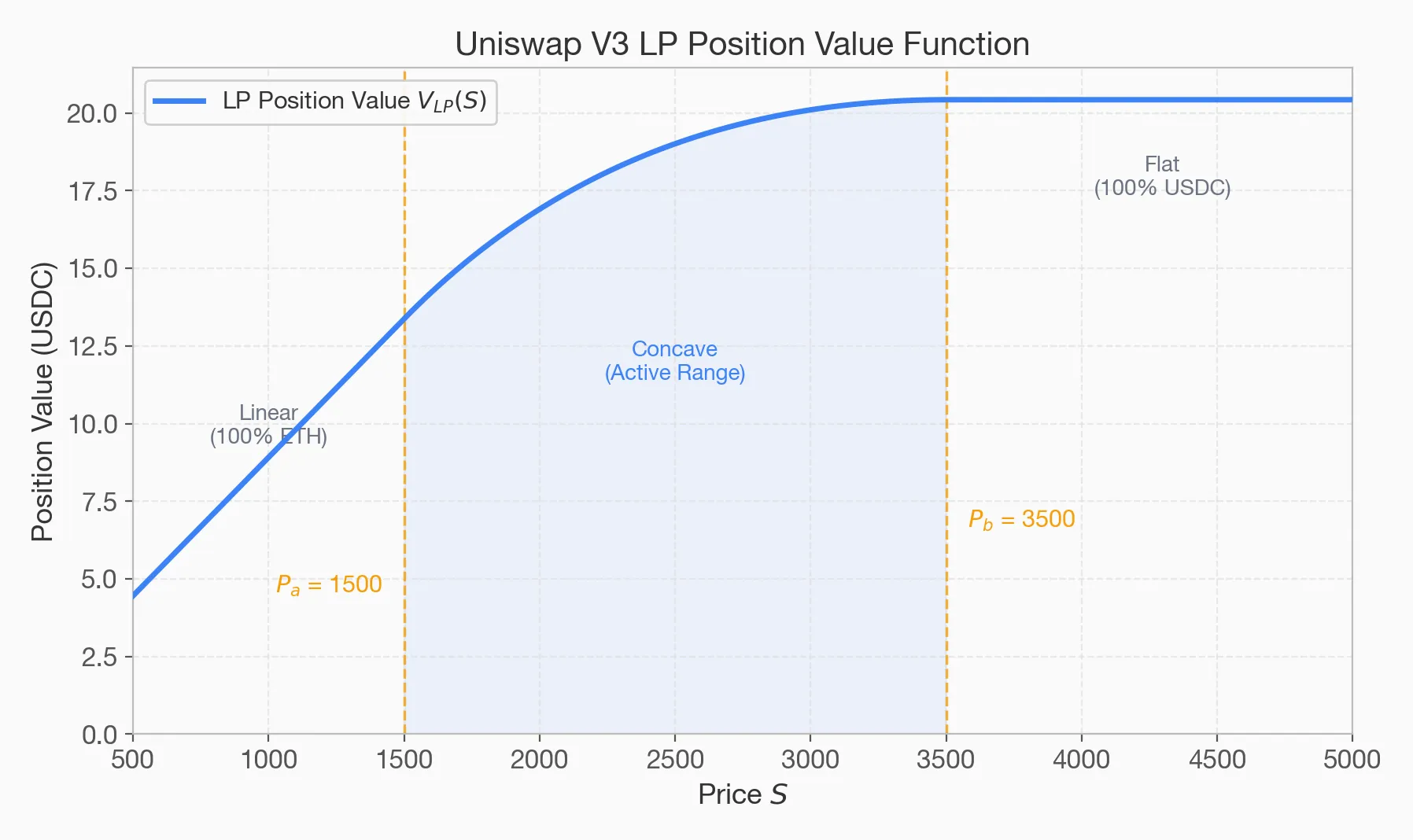
AMM Quant Deep Dive 02: A Derivatives Pricing Model for Uniswap V3

AMM Quant Deep Dive 02: A Derivatives Pricing Model for Uniswap V3

In the discussion in the previous article, “AMM Quant Deep Dive 01”, we used Ito’s lemma to show that the core cost borne by an LP is LVR (Loss-Versus-Rebalancing), which takes the form \(\frac{\sigma^2}{8} V dt\) under the constant-product formula. That result revealed the essence of the “volatility tax,” but to hedge risk more precisely, we still need a tighter pricing framework.

Drawing on recent research by Hou, Singh, Echenim, and others, this article reviews the static structural prototype of LP positions and discusses their risk and value characterization from two angles: absolute valuation under boundary stopping times, and marginal cost under a continuous-installment perspective.

Read more
The Rise and Fall of an Obscure On-Chain LP Strategy: Clouds Break, the Moon Appears, and Flowers Cast Shadows
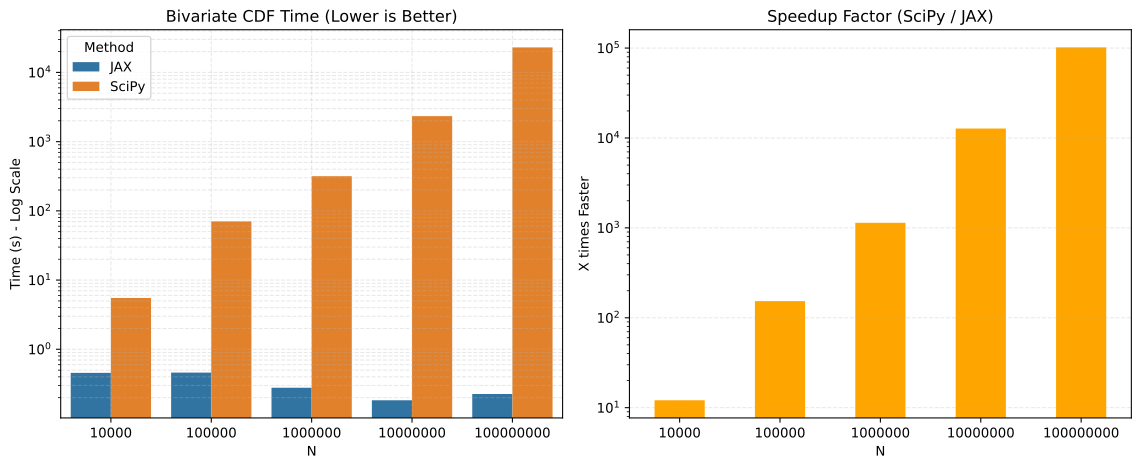
10,000x Faster: The Ultimate High-Performance Normal Integration Solution, with Code

10,000x Faster: The Ultimate High-Performance Normal Integration Solution, with Code

In derivatives pricing and large-scale risk backtesting, where every millisecond matters, traditional normal-distribution integration often becomes both ugly code and a performance bottleneck. This article introduces a fully vectorized numerical algorithm that lets you exploit the parallelism of modern CPUs, GPUs, and even TPUs to break through that bottleneck.

Read more
[AMM Quant Deep Dive 01] Understanding the Economic Essence of AMMs: From Impermanent Loss (IL) to Loss-Versus-Rebalancing (LVR)

[AMM Quant Deep Dive 01] Understanding the Economic Essence of AMMs: From Impermanent Loss (IL) to Loss-Versus-Rebalancing (LVR)

Many people treat providing liquidity (LP) on on-chain exchanges (DEXs) such as Uniswap as a passive form of “yield management” or “mining.” That is an extremely dangerous misunderstanding. From the perspective of market microstructure, an AMM is fundamentally an adverse-selection game arena defined by an algorithm.

This article is the first entry in the [AMM Quant Deep Dive] series. We will abandon the traditional retail-investor perspective, start from macro market equilibrium, strip away the disguise of “impermanent loss (IL)” through rigorous mathematical derivation, and introduce the true core risk metric for professional AMM market making: Loss-Versus-Rebalancing (LVR).

Read more
Kuru: Building a Next-Generation DEX on a Next-Generation Blockchain
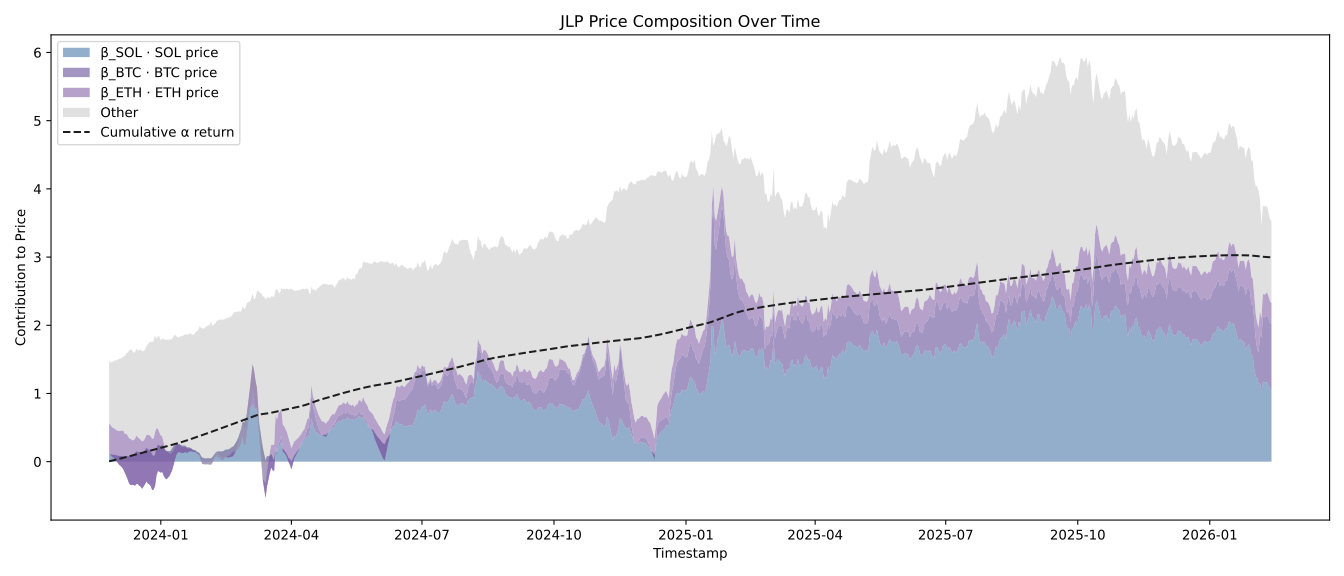
With the Dust of the Market: Notes on the Practice of the Generalized Liquidity Provider

With the Dust of the Market: Notes on the Practice of the Generalized Liquidity Provider

When things reach an impasse, change becomes possible; through change comes flow; through flow comes endurance.

The techniques of markets change without cease. High-frequency market making chases light at the microsecond scale; on-chain protocols build pools of liquidity with mathematics; spot-futures arbitrage searches across different time horizons for the pull of equilibrium. There are countless methods.

And yet the Great Way is simple, and all methods return to one origin. There is a path that does not cling to technique but wanders through principle, turning complexity back into simplicity: the practice of the “generalized liquidity provider” (LP). Those who follow it eventually see that market making and arbitrage are merely two sides of the same coin, each rooted in the other.

These notes are a record of that practice. What they seek is not a bag of tricks, but a way that runs through the whole system: a unified underlying framework for every form of liquidity provision. Only then can one build durable understanding in a market that never stands still, and ultimately move in harmony with it.
Read more
Research Report on Technical Implementation Paths for Low-Latency Trading in China's A-Share Market in 2025

Research Report on Technical Implementation Paths for Low-Latency Trading in China's A-Share Market in 2025

This report systematically reviews the key links in the low-latency trading stack for China’s A-share market in 2025 and beyond, from exchanges to brokers to the client side. Achieving extreme low latency requires coordinated optimization across trading units, ultra-fast broker counters, low-latency brokerage and market data services, networks, algorithms, and hardware. New regulatory rules also raise the bar for both technical implementation and compliance. By combining the latest technology and policy trends, the report evaluates the latency characteristics of different approaches and provides a reference for market participants.

Read more
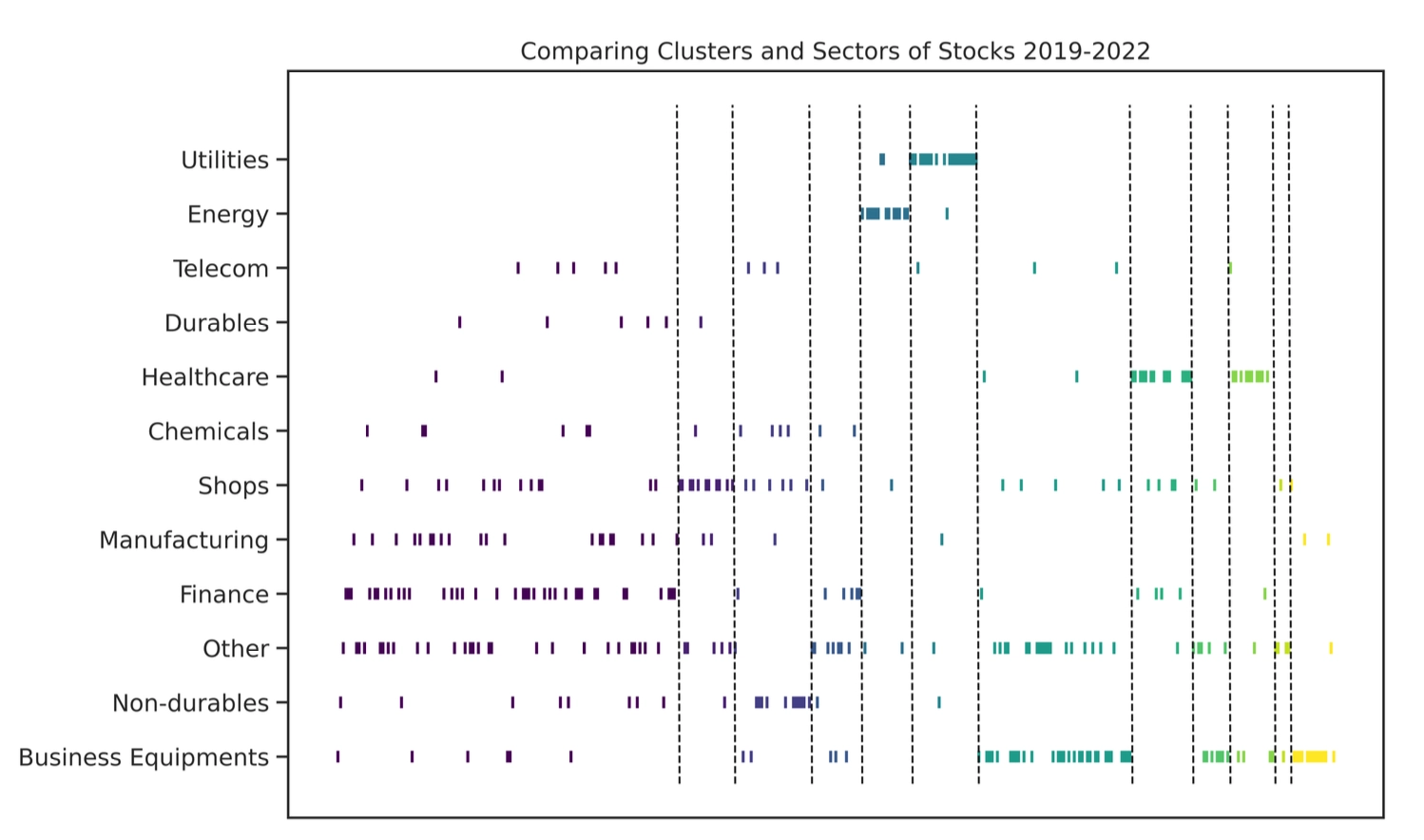
Building Statistical Arbitrage Portfolios with Correlation-Matrix Clustering: A Graph-Clustering Framework

Building Statistical Arbitrage Portfolios with Correlation-Matrix Clustering: A Graph-Clustering Framework

The core of a statistical arbitrage strategy lies in identifying and exploiting temporary deviations in asset prices. Traditional approaches such as pairs trading are well known, but scaling them efficiently to large asset universes while preserving robustness has remained difficult. A recent Oxford research paper, Correlation Matrix Clustering for Statistical Arbitrage Portfolios, proposes an innovative framework: apply graph clustering algorithms to the correlation matrix of stock residual returns, then build mean-reverting statistical arbitrage portfolios inside each cluster. Empirical results show that the method can generate annualized returns above 10% with Sharpe ratios significantly greater than 1.

Read more