A Bayesian-Inference Method for Measuring Box Office Outperformance

The film industry is a market with exceptionally high uncertainty, and box office performance directly affects both the financial condition and market valuation of production companies. The degree of box office outperformance is a key indicator of how well a movie is received by the market and an important variable in evaluating film-company performance. Traditional box office forecasting methods, however, often rely on static point-estimate models. They struggle to capture the dynamic evolution of box office revenue over time, and they are even less capable of quantifying how far box office results exceed market expectations and with what level of uncertainty. As a result, they are difficult to convert into actionable investment strategies.
Read more
Learning to Rank in Brief: From RankNet to LambdaMART

Learning to Rank in Brief: From RankNet to LambdaMART

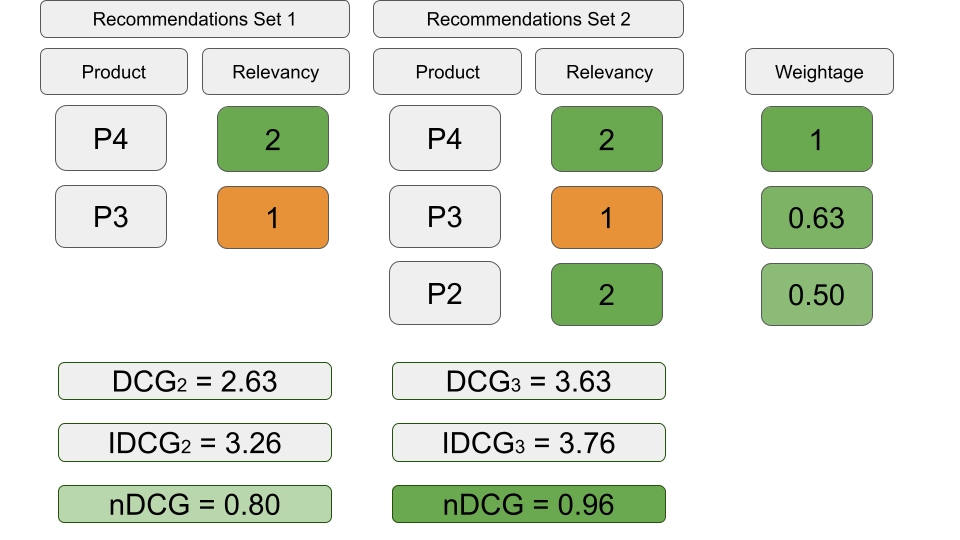
This article gives a concise introduction to the background, taxonomy, and evaluation metrics of learning to rank, then reviews several classic algorithms from its development history. The goal is not to cover every technical detail, but to build an intuitive understanding of the core concepts behind ranking, as preparation for practical LTR applications in different scenarios.

Read more

Shaputa: A Feature Selection Method That Combines SHAP and Boruta

Shaputa is a hybrid feature selection technique that combines SHAP (SHapley Additive exPlanations) with Boruta’s shadow-feature mechanism. By constructing a random baseline for every feature and comparing it with model-derived SHAP importance, Shaputa produces more robust and structure-aware feature selection results in high-dimensional, complex datasets. It is especially useful in nonlinear settings where traditional methods often struggle.

Read more
Trends in Large Language Models and Their Applications in Quantitative Investing

Trends in Large Language Models and Their Applications in Quantitative Investing

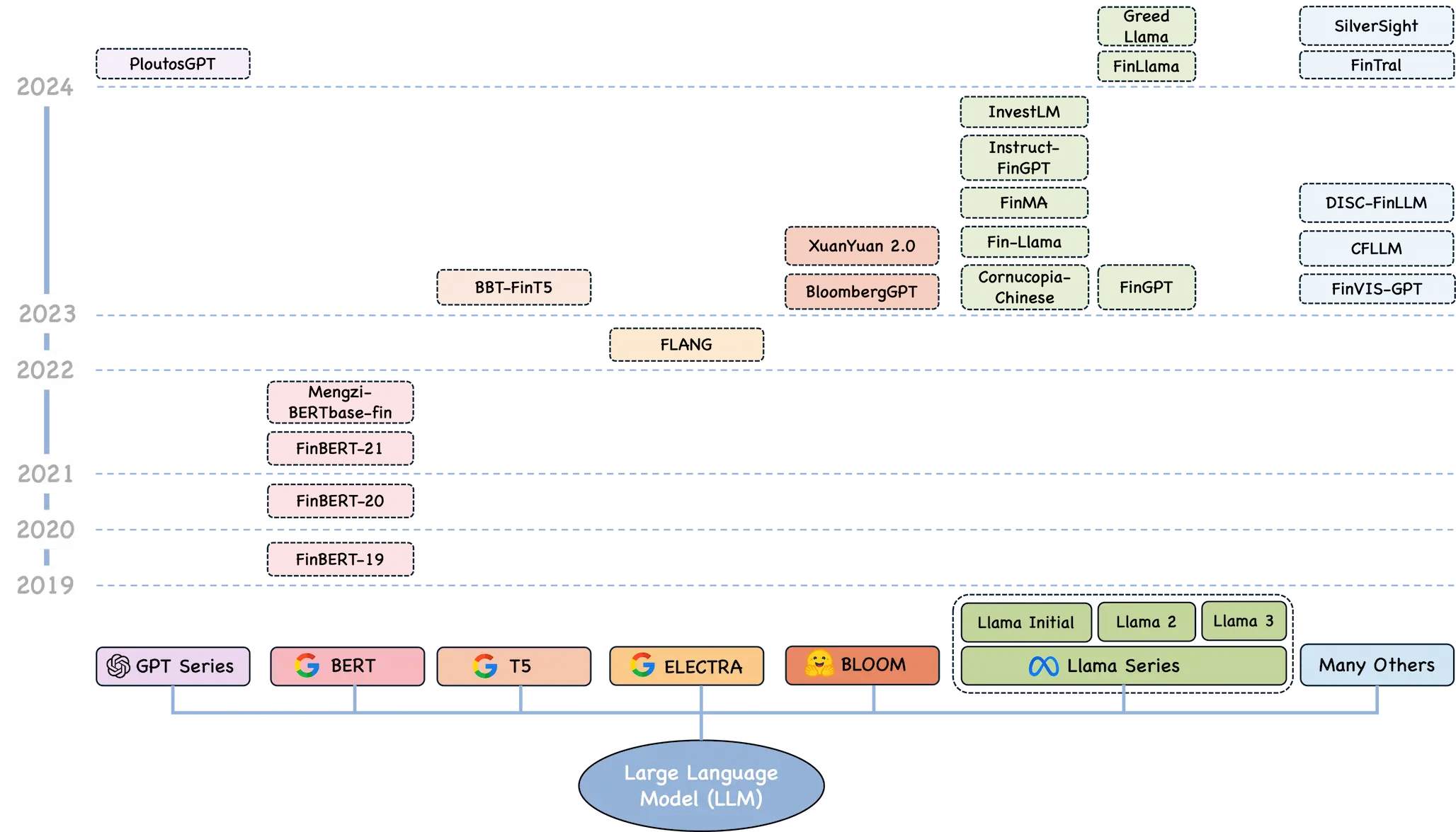
Large language models have become the hottest and fastest-moving frontier in computing since ChatGPT burst onto the scene at the end of 2022. LLMs have gradually shed the role of mere tools and become independent carriers of intelligence that can handle tasks on their own. In 2024, hundred-billion-parameter models such as Qwen2 and Llama3.1 were released one after another, and the performance of open-source models has moved steadily closer to that of closed-source systems. For quantitative researchers, a necessary question is how to combine LLM technology with financial applications to improve research and investment. This article first draws on Li Mu’s talk to discuss LLM trends and best practices, and then reviews specific application scenarios for LLMs in quantitative investing.

Read more
Phase Three Quant Work Summary and Next Steps: Complexity and Cost Control

Thinking One Move Ahead: Multi-Period Portfolio Optimization

In the earlier article Portfolio Optimization for Long-Only Multi-Factor Equity Strategies, I gave a fairly complete introduction to how the problem of solving single-period portfolio weights can be transformed into a quadratic program. This article summarizes the key ideas of the Stanford and BlackRock collaboration paper Multi-Period Trading via Convex Optimization. Published in 2017, that paper offered one of the first systematic treatments of multi-period optimization in portfolio management.

Read more
Algorithmic Trading Strategies Based on Deep Reinforcement Learning

Algorithmic Trading Strategies Based on Deep Reinforcement Learning

There is broad market demand for algorithmic trading. This article analyzes how to implement algorithmic trading from the perspective of deep reinforcement learning, including policy inputs and outputs, reward functions, and neural-network structure. Compared with traditional methods, DRL has clear advantages in optimal execution across multiple orders and does not require precise mathematical modeling of time-varying market microstructure. The policy is optimized toward a global objective. Finally, the article also considers how intraday trading strategies can be integrated organically with alpha strategies.

Read more
Phase Two Quant Work Summary and the Plan Ahead